SeXObjects | Curated by Hannah Sloan
Featuring: Abby Aceves, Lavaille Campbell, Jean Lowe, Alia Malley, Valiente Pastel, and Elizabeth Scott
November 29 – January 17, 2026
Before the internet mediated desire, Generation X—my generation—learned about sex through experience: messy, human, and unfiltered. Our education unfolded in bedrooms, cars, and nightclubs entered with fake IDs, soundtracked by the ragged defiance of Courtney Love and the unapologetic fury of 1990s riot grrrl feminism. Unlike our younger counterparts, we came of age—and defined ourselves sexually—before the onslaught of internet porn and the slow erosion of intimacy brought on by smartphones and digital distraction. In an era when a screen can dull the libido and physical sex is in decline, that pre-internet reality of tangible, erotic self-discovery feels like a bygone luxury, as imperfect as it was.
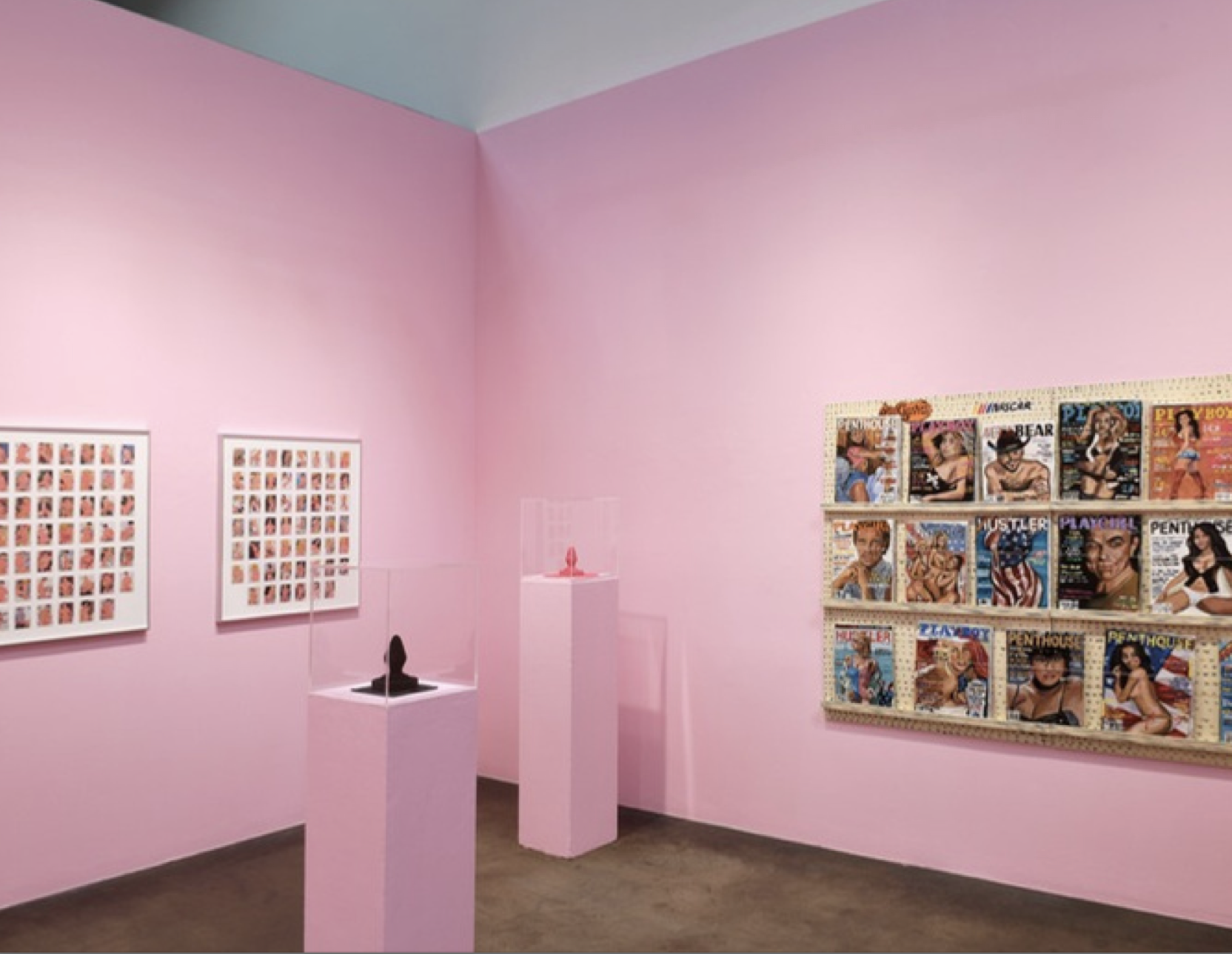
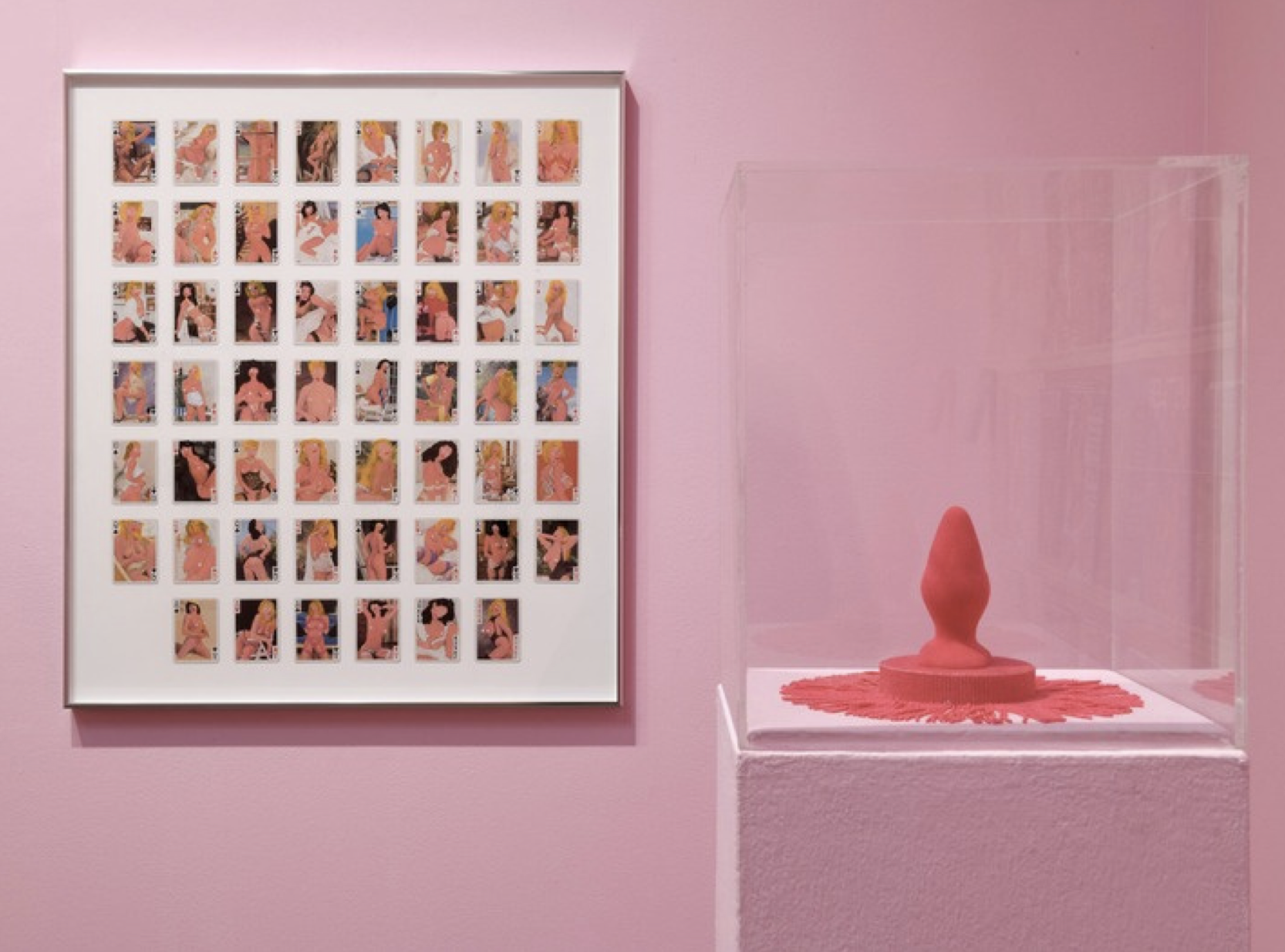
SeXObjects at Craig Krull Gallery playfully and earnestly revisits that visceral era, when intimacy was chaotic, risky, and real—before swipes, screens, and algorithms reprogrammed how we connect and feel. Fueled by nostalgia and yearning, the exhibition invites viewers back into a tactile, pre-internet universe, when desire was discovered in the hushed corners of sex shops, the thrill of a secret club, or the glossy pages of a magazine—through the work of six artists whose contributions are challenging, personal, honest, and sex-positive.
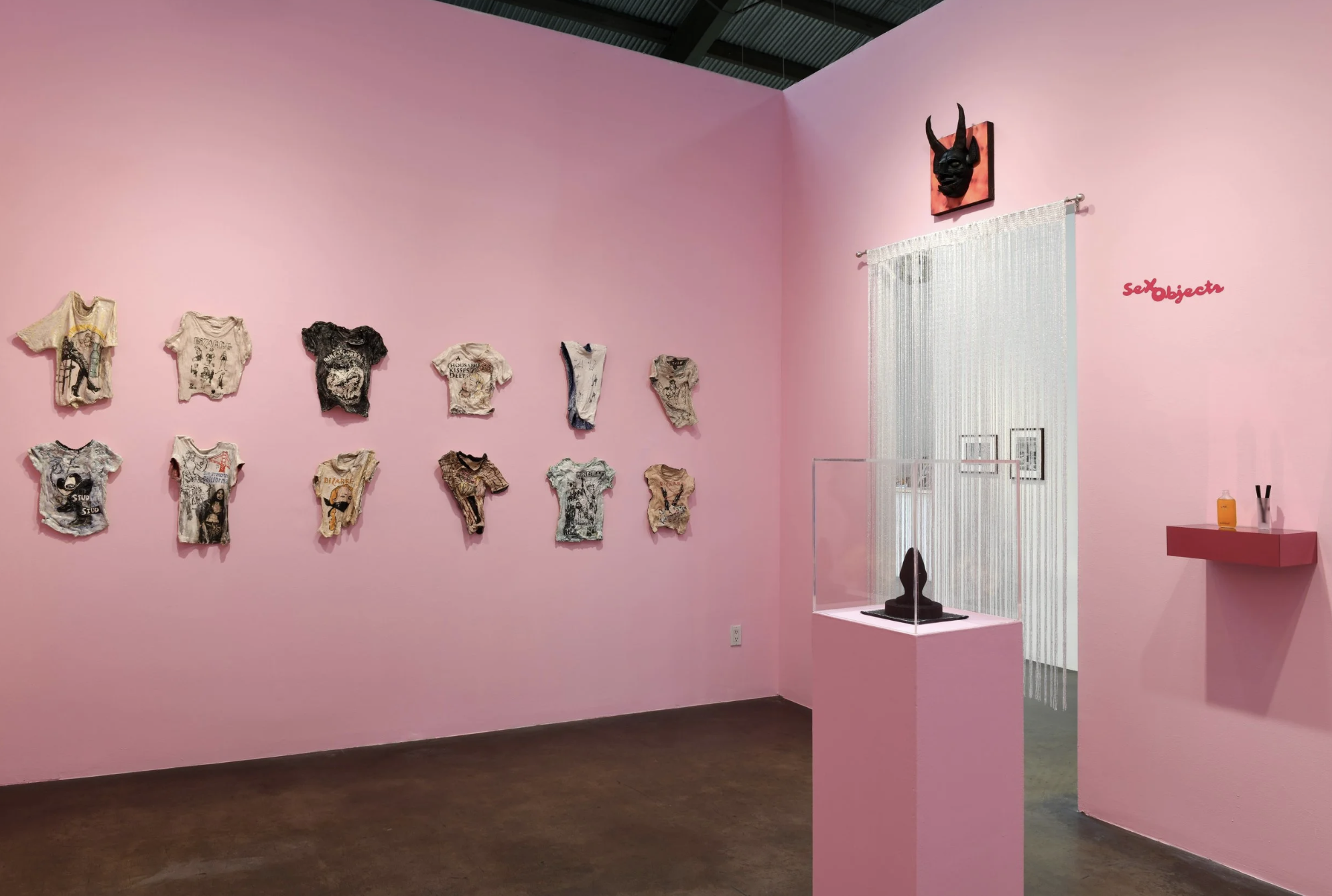
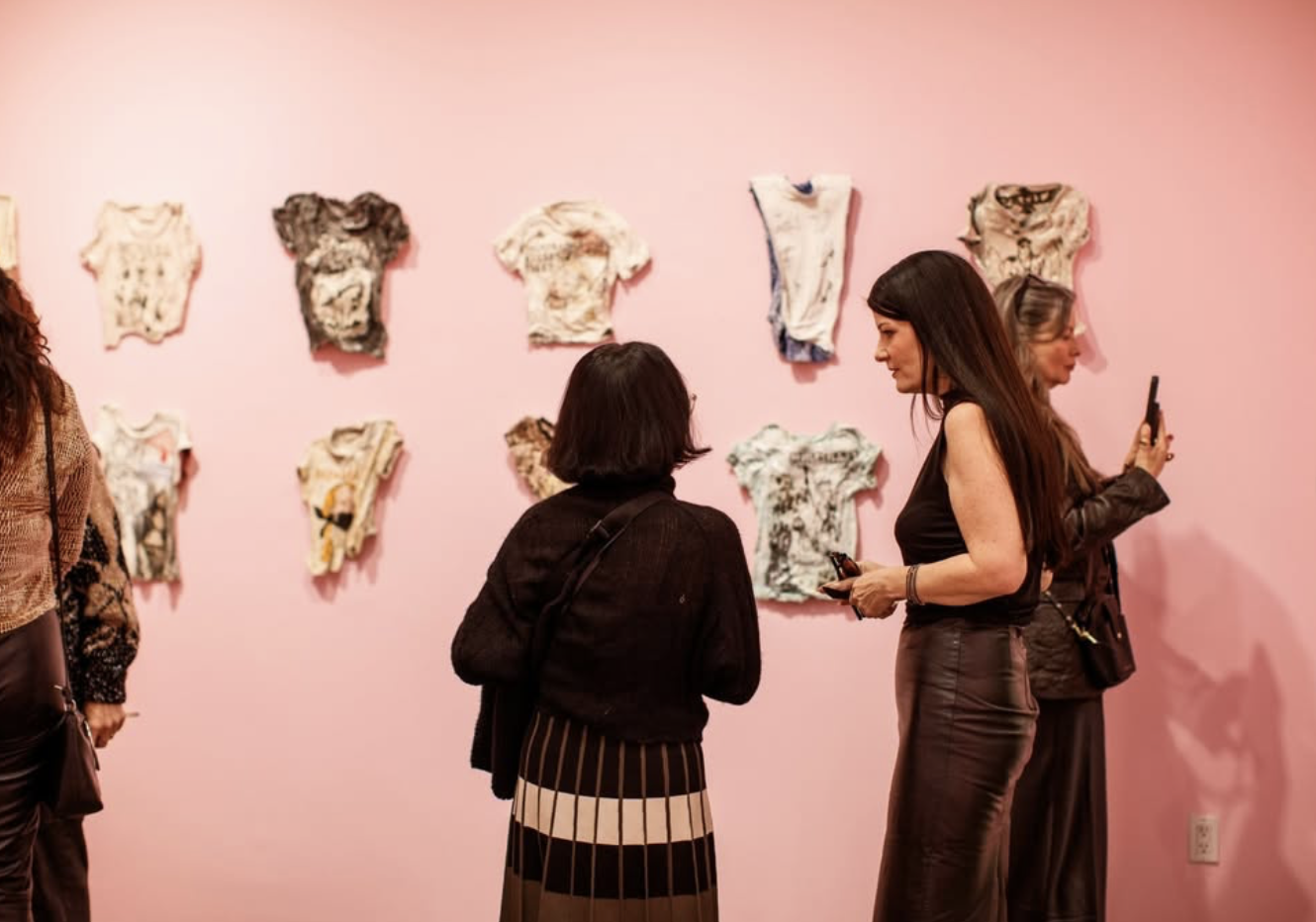
Elizabeth Scott’s ceramic “t-shirts” act like mixtapes of memory, desire, and longing. Drawing on her upbringing in San Jose, California and the Bay Area’s queer counterculture, Scott translates the secret codes of underground sexual communities into tactile, sculptural forms. Her adroit handling of clay brings the folds and creases of her t-shirts to life, as if they carry the intimacy of having been recently worn by a young body. She writes: “Before the internet collapsed everything into the same screen, desire moved differently. I learned (about sex) through record stores, books, mom and pop video shops, and whatever I could get my hands on. I became fascinated by how people used codes: language, fashion, symbols, visual cues. These signals created informal systems of trust and recognition, where access often depended on being able to read between the lines. This work pulls from that visual and emotional language: leather bar flyers, Folsom Street Fair photos, and the subtler cues embedded in music, television, and film. It is a love letter to California’s history of self-invention and the ways people have carved out space for identity, kink, and intimacy, often by hiding things in plain sight.”